For decades, Sparkasse Leipzig collected works exclusively from local artists based in Leipzig to support the local art community, continuing to do so until 2019. Currently, no new acquisitions are being made. Sparkasse now focuses exclusively on presenting its own collection. Several times a year, there are collection exhibitions, and publications are issued featuring photographs and essays about the works and artists in the collection.
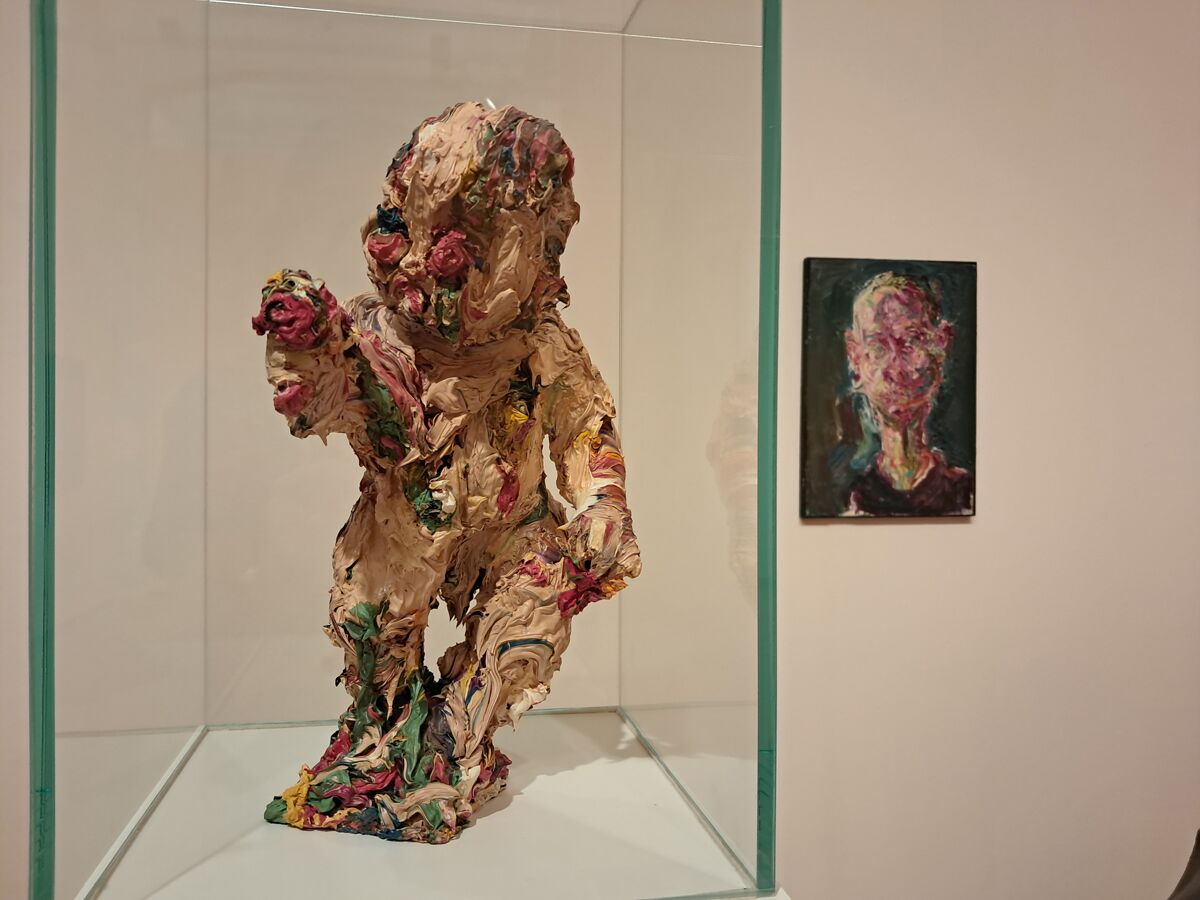
The current curator, Olga Vostretsova, invites me to visit. The Kunsthalle is open to the general public several days a week. It also offers artists a space to work within the exhibition and draw inspiration from the works on display (this is happening while I’m there, too). On weekdays, there’s an intensive educational program for students ranging from elementary school to higher art education (that’s happening while I’m there, too). In keeping with European tradition, the collection consists mainly of works by men, and here in Leipzig, primarily paintings. Many artists also teach at the Leipziger Schule.
In this exhibition, Olga has also ensured that women and other media are represented, which is great. It’s a small community—one work is by a teacher, the next by a student, or a male artist paints his wife, who is also an artist and creates a self-portrait; everything seems to refer to one another and be intertwined. Students collaborated on the installation design; throughout the exhibition, you see the blue piping made by schoolchildren recurring, and a publication has also been produced featuring the work they created (available for purchase).
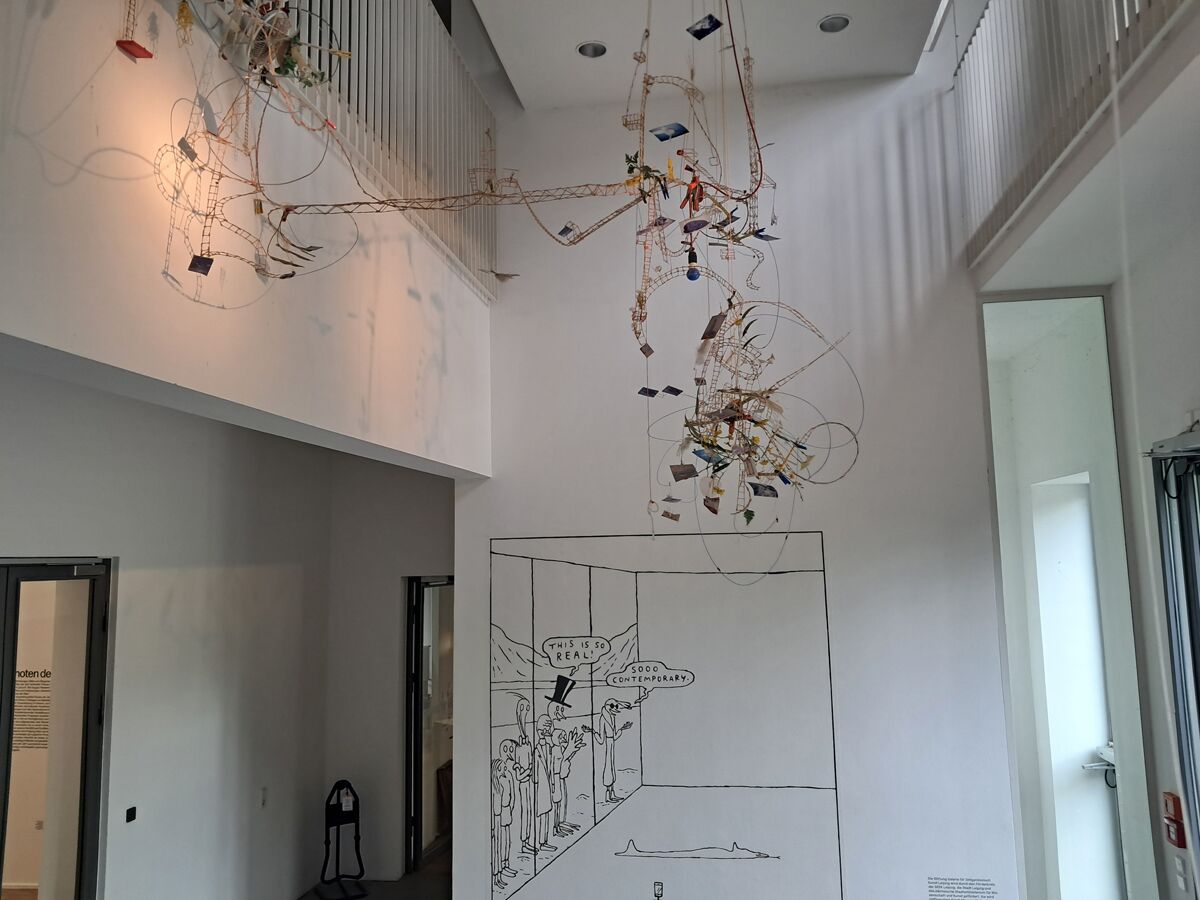
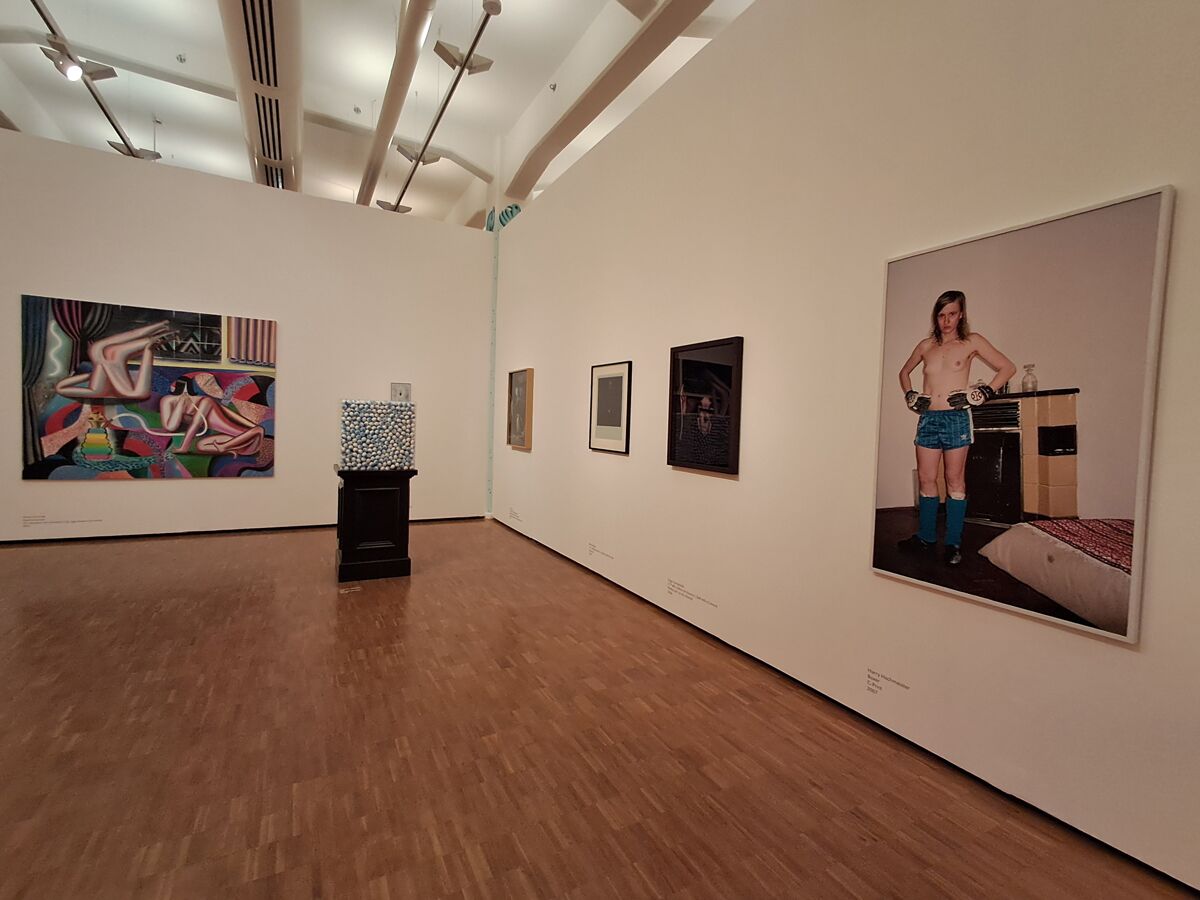
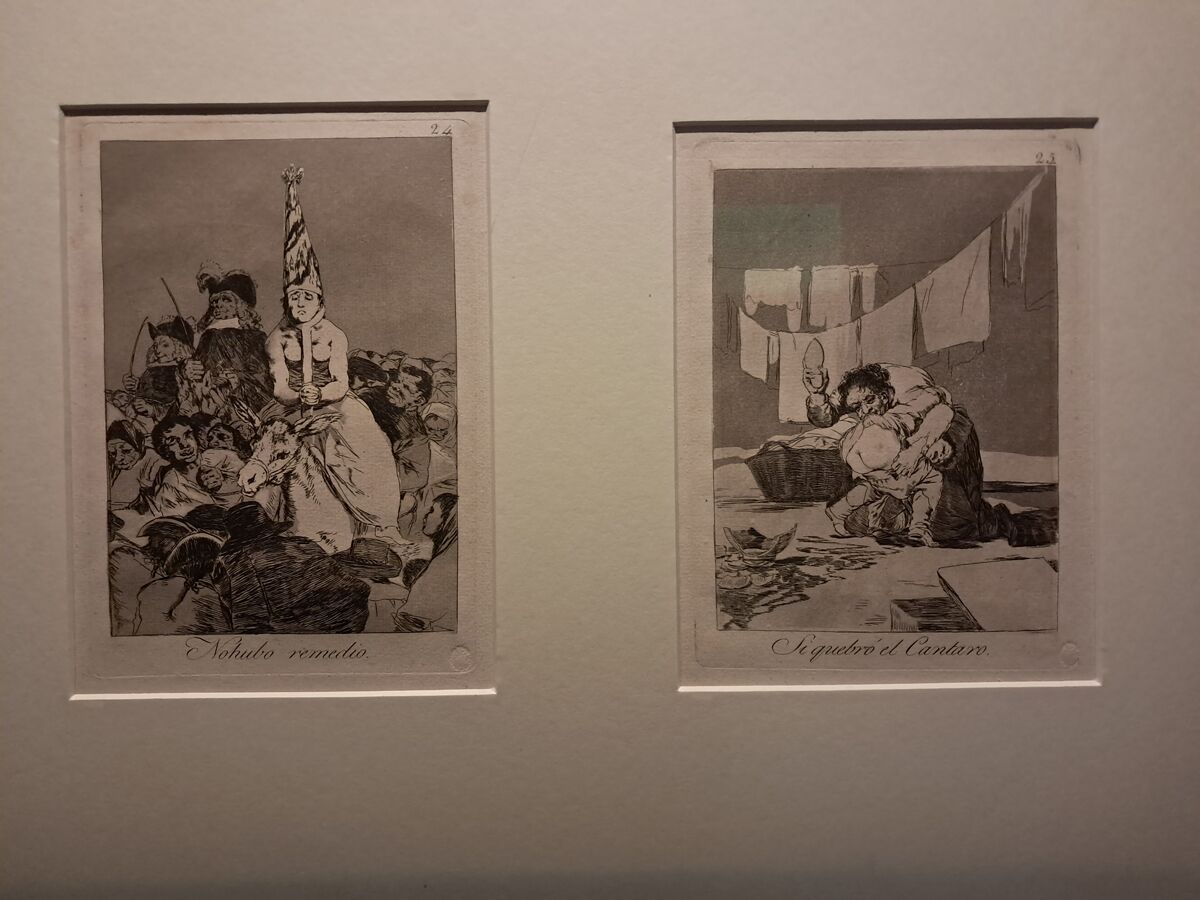
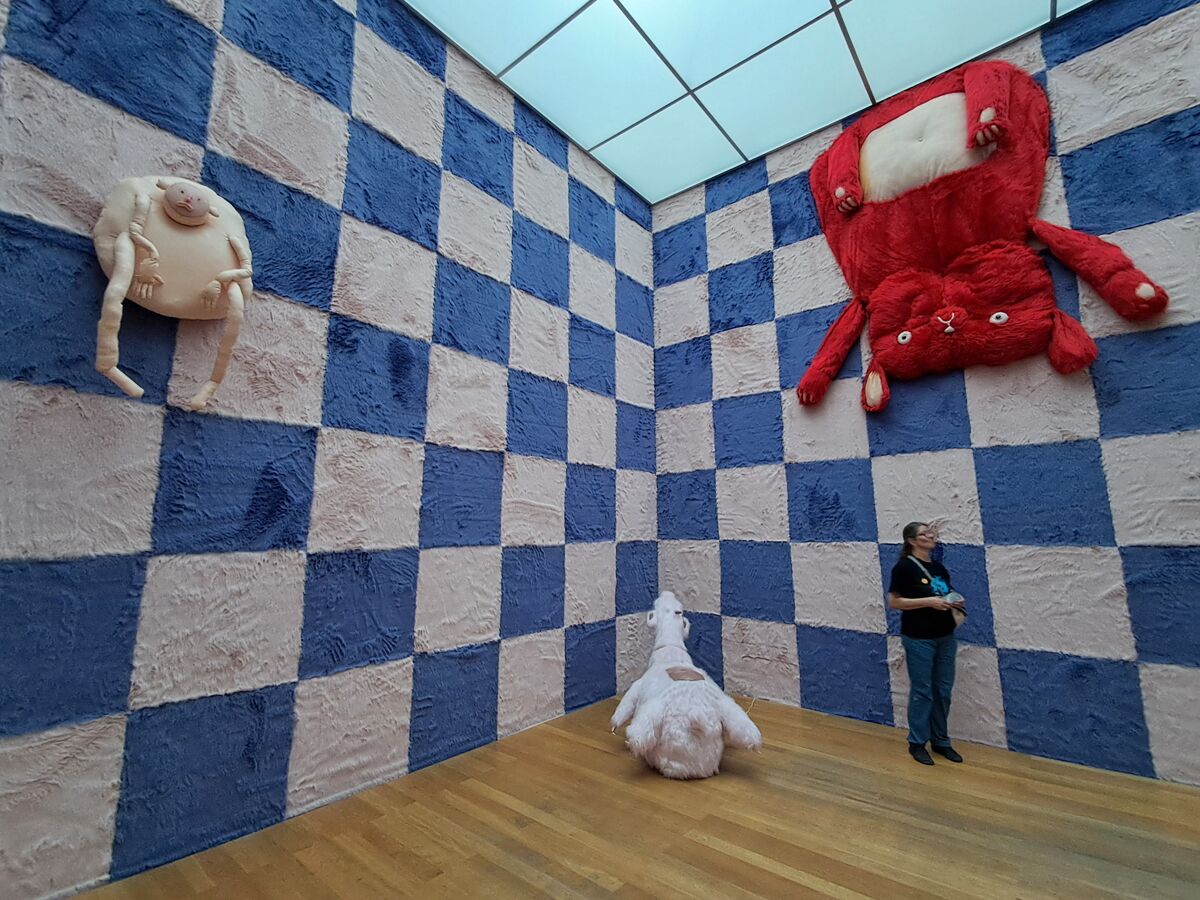
In the city center is the Museum of Fine Arts (MDKB), founded in 1848 and relocated several times over the years. It burned down in 1945, reopened in a different building in 1952, and then moved again. In 2004, a large new multi-story building was constructed in the city center. The works are arranged chronologically, featuring art from the Middle Ages to the present. I start on the top floor with whimsical installations, then move through many paintings—again from the Leipzig School—and continue down through the building, traveling back in time. The museum’s current collection consists of paintings, sculptures, and—the largest subcollection—graphic art. For example, while I’m in Leipzig, there’s an exhibition of well-known graphic works by Francisco de Goya, which I also saw last year in Oslo.