(Caribbean Coast of Nicaragua)
By exploring a story that originates in the heart of the jungle—and acknowledging the capricious twists of fate—we might be drawn to the way in which a particular faith came to permeate the Caribbean territory of Nicaragua, a region that, by the 18th century, had not yet succumbed to the Spanish conquest. This work presents a terrain that, for some, still today, sparks debate and questioning about the reasons for the “relative” freedom of these communities; considering whether it stemmed from the indigenous people’s capacity for resistance, or from the lack of interest the Castilian forces held for that dense and rugged landscape.
The idea of recreating this scenario combines my life experience in Nicaragua with my visit to the Herrnhut Museum of Ethnology in the province of Saxony, Germany. In this place, one can still perceive the continuity of the solemn commitment that the Moravian Missionaries (Unitas Fratrum) made upon their calling and acceptance, enduring centuries of sustained persecution, sheltered by the vast scope of their faith. This faith led them to travel the world from the beginning of the 17th century, eventually establishing contact with the indigenous communities of the Nicaraguan Caribbean. This museum in Saxony houses some of the artifacts that bear witness to multiple stories of conflicting beliefs evolving into adaptation and coexistence.
For the early Moravian Missionaries, the adventure of crossing the ocean was characterized by a spiritual credulity far greater than the palpable material security; that is, the vessels of that time embarked on such an undertaking with significant risks: the wooden and unpowered naval structures had to overcome unpredictable storms, hurricanes, shipwrecks, diseases, pirates or privateers; even the lack of food and water could be a powerful cause of anguish in the face of a possible prolongation of the journey.
The meritorious aspects that defined the Moravian faith in this context expanded into different facets; however, the basis that allows us to understand the behavior of the missions derives from the conditions that were subordinated to the divine message, since they considered that it lost strength if it was preached from positions of power and opulence, even perceiving voluntary poverty as an act consistent with the gospel, where incurring material failure was preferable to a dependence that was supported or based on colonial structures.
The distance that the missionaries maintained from enrichment could also raise certain questions about how they would come to have influence or repercussions on the various cultures they approached; in our case, referring to the Nicaraguan Caribbean, this region had, at the arrival of the Moravian Brothers in 1849, indigenous populations: Miskitos or Miskitu, Mayangnas or Sumos, Ramas; as well as Afro-Caribbean Creole groups and to a lesser extent a mestizo society.
Before the Moravian arrival, the Caribbean communities had already maintained a “selective approach with Europe,” allowing interaction with the British, which had been developing since the first half of the 17th century. The processes of approach and negotiation demonstrated that this native population incorporated into their life dynamics what they considered useful or beneficial, thus resisting any movement that represented a direct threat to their autonomy.
In this sense, the English presence was geared more towards a strategic alliance than an overwhelming conquest. The first stage of their relationship with the indigenous peoples, primarily the Miskito, focused on expanding their trade routes, which involved privateers, pirates, and loggers. Thus, the British forces largely respected local political autonomy, opting instead to recognize indigenous leaders, such as the so-called Miskito King. This exchange facilitated the acquisition of firearms, tools, textiles, and other goods for the communities; in turn, the navigators received valuable timber, access to maritime routes, and the support of the natives against Spanish interests.
The evolution and organization of Caribbean communities in Nicaragua show marked transformations with certain differences since the arrival of the Spanish. Thus, autonomous, decentralized groups resistant to external control were found during the initial phase of these newcomers. Later, following the British coalition, greater political centralization occurred, along with the emergence of indigenous elites, the formation of the Mosquito Coast, and integration with international interests. Subsequently, the contributions of Moravian missionaries led to a social and cultural reorganization based on religion, education, and new forms of moral authority.
It is necessary to point out, in line with the historical debate concerning the high indigenous resistance to Spanish expansion, or conversely, the lack of interest that the soldiers showed towards that space; there are relevant coincidences on the part of historians, which marks a panorama that shows a combination of both factors.
The Spanish colonial model was more compatible with large, sedentary populations, which would facilitate control or tribute collection; also, for them, the presence of clear mineral or agricultural wealth was paramount. On the other hand, the Caribbean indigenous communities controlled rivers, jungles, mangroves, and natural routes; they were skilled in mobile warfare, ambushes, and rapid retreats, with extensive knowledge of the terrain. The spirituality inherent in combat and the hallucinatory atmosphere of the jungle could be a great native ally, transforming the conquistadors’ perspective and immersing them in what would be, for them, a hostile and unpredictable terrain…
It is found within the chronicles of the Indies, based on authors such as Gonzalo Fernández de Oviedo and Bartolomé de las Casas, narratives that point to the attempted incursions, religious missions and campaigns that sought a displacement towards the Caribbean; likewise, anthropological studies by the Americans Karl Offen and Mary Helms, expand on this theme reflecting that there was indeed a purpose of occupation, but a real and stable control of said region was never achieved.
The evangelistic dynamics employed by the Moravian missions constituted a unique interaction. Beyond their active involvement in community development, combining faith with practical assistance through the promotion of health, employment, and education, a crucial aspect was their initial approach: they sought acceptance from local leaders while respecting existing structures as much as possible. In some cases, they requested and received concessions or agreements from these authorities, such as permission to live in the communities, preach, open schools, and learn indigenous languages.
These agreements, which took the form of formal accords or verbal permissions according to the indigenous customs of the time, are recorded in the diaries and letters of the Moravians, as well as in British chronicles and in the historical memory that remained as part of the Miskito oral tradition. In this regard, community narratives and historical records indicate that the first missionaries received authorization from the Miskito king George Augustus Frederic II—known in Spanish as Jorge Guillermo—to settle in what was then called Mosquitia.
The Miskito leaders, who already possessed some prior knowledge of what we would now call diplomacy or international relations, witnessed the arrival—first from Germany and then from the United States—of a missionary corps comprised of pastors, teachers, carpenters, doctors, nurses, and other tradespeople. Local records indicate that the first evangelistic service was held in March 1849, under a breadfruit tree near the municipal pier in Bluefields.
The indigenous worldview of the region, along with the arrival of the Moravian Church, shaped a kind of syncretism with distinct characteristics compared to the similar processes that the Catholic congregation incorporated in the Pacific. Given that Moravian teachings, as a Protestant Christian denomination, have doctrinal and organizational differences from those promulgated by the Catholic clergy, the Caribbean Coast of Nicaragua did not experience the transformations or transmutations of abstract beliefs derived from indigenous rituals into new sanctified images or sculptures that characterized the religious movement in other parts of the country.
The practical life of these communities did not merely establish a system of “beliefs,” but rather was supported by structures for understanding life, death, health, and social bonds and relationships with the natural environment. The spiritual leader was represented by the figure of the sukia or zukía, who acted as a healer, medicine man, and mediator between the human and the imperceptible. Indigenous rituals were not translated into syncretic festivals; instead, their mission was conveyed through a model of activities that strengthened the community’s work and learning, thus reorganizing cultural life, which was also intertwined with the church or house of worship.
Agricultural work, such as planting corn, cassava, cacao, bananas, and other crops, along with raising animals, allowed many missions to function as small, self-sufficient, productive communities. The international organization that Unitas Fratrum had been consolidating also facilitated donations from Moravian congregations in Germany, the United States, and England; funds from sister churches; and support from Protestant missionary societies. These contributions did not generate great luxuries or profits for the missionary body, but rather provided them with just enough to live, travel, and begin settling down. They also resorted to bartering, exchanging food for tools, medicine, and education. The knowledge of the trades they brought with them, which they shared, enabled them to build their own houses and chapels, as well as jointly establish schools and basic medical care centers.
Thus, it could be inferred that a social and cultural syncretism did exist, but it was not based on the adaptation or fusion of sacred images, but on the integration of Christian practices with previous indigenous community structures. For many Miskito and coastal peoples, the Moravian arrival represented not only a religion, but an institution that articulated local and regional identity alongside a mestizo and Catholic culture that predominated in the interior of the country, awakening an ethnic-religious consciousness that generated a sense of identity in this space.
The ecclesiastical norms concerning marriage and interpersonal relationships with the native community, initially maintained by European and American missionaries, adhered to the ideal of maintaining a certain “moral and cultural distance” while promoting evangelization. However, in the late 19th and throughout the 20th centuries, some propagators of the faith, or their descendants, did marry local women or men. Thus, one can find surnames of German and English origin in some Miskito or Creole families in the coastal areas today. A process of cultural assimilation was also observed, in which the natives themselves became Moravian religious leaders, strengthening religious mixing beyond the ethnic.
While the arrival of missionaries in the Caribbean region of Nicaragua did not represent a direct clash of cultures, but rather fostered a kind of synergy, over time some opposing aspects of this encounter can be identified: the generations following the first missions grew up within a Western Christian framework, exhibiting a disdainful attitude toward their own ancient worldview; although some languages were preserved, formal education became associated with “prestige” languages (English and Spanish), and this partial linguistic imposition weakened the exclusive use of native languages in many social spheres. Community structure was reorganized around the model of worship, school, and church, and the new forms of Christian families were based on European morality. Churches became centers of social power. The integration of these communities into Western dynamics promoted the values of private property, wage labor, and formal schooling.
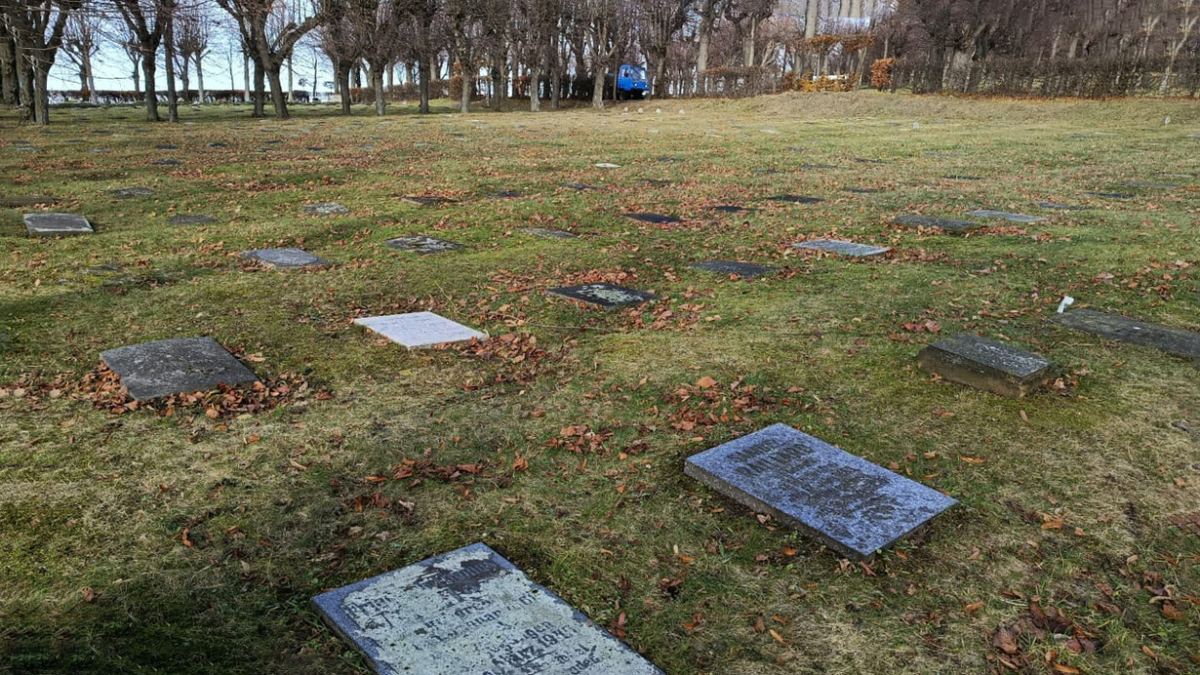
By considering these paragraphs merely as a preamble or journey through a story spanning almost two centuries, we arrive at the layers of the new era and the dynamics of globalization, observing the profound vicissitudes currently faced by the Nicaraguan peoples of the Caribbean, where a homeland is now being formed whose intrinsic hope is upheld by the Moravian faith. Here, there will be a convergence of knowledge, a welcoming embrace that prevails toward those who one day arrived driven by fraternal thought and a single mission… Turning my mind, then, to the small and quiet town of Herrnhut: that which was an incipient refuge and which today recognizes itself, already aware of its vast legacy; there, I would pass through a simple, equanimous, and solemn church; Very close after, the final destination of the faithful, the cemetery or “Gottesacker”: tiny tombstones aligned that barely sprout from the earth, the last symbol of equality, the last door that would open their beliefs in the kingdom of heaven.
Thanks to the Leipzig International Art (LIA) program for enabling the research coordination.
Literature
Helms, M. W. (1971). Asang: Adaptations to culture contact in a Miskito community . University of Florida Press.
Helms, M. W. (1983). Middle America: A culture history of heartland and frontiers . Prentice-Hall.
Offen, K. H. (2007). The territorial turn: Making black territories in Pacific Colombia. Journal of Latin American Geography , 6 (1), 43–73.
Offen, K. H. (2011). Mapping indigenous lands in Central America. Latin American Research Review , 46 (1), 233–245.
Loveland, A. O. (1966). The Evangelical Missionary Movement in the nineteenth century . Abingdon Press.
Vernon, D. J. (1986). The Moravian Church and the frontier mission in Central America. Missiology , 14 (2), 183–198.
Newson, L. A. (1986). The cost of conquest: Indian decline in Honduras under Spanish rule . Westview Press.
Dozier, C. L. (1985). Nicaragua’s Mosquito Coast: Historical perspectives. Caribbean Studies , 18 (3), 1–24.