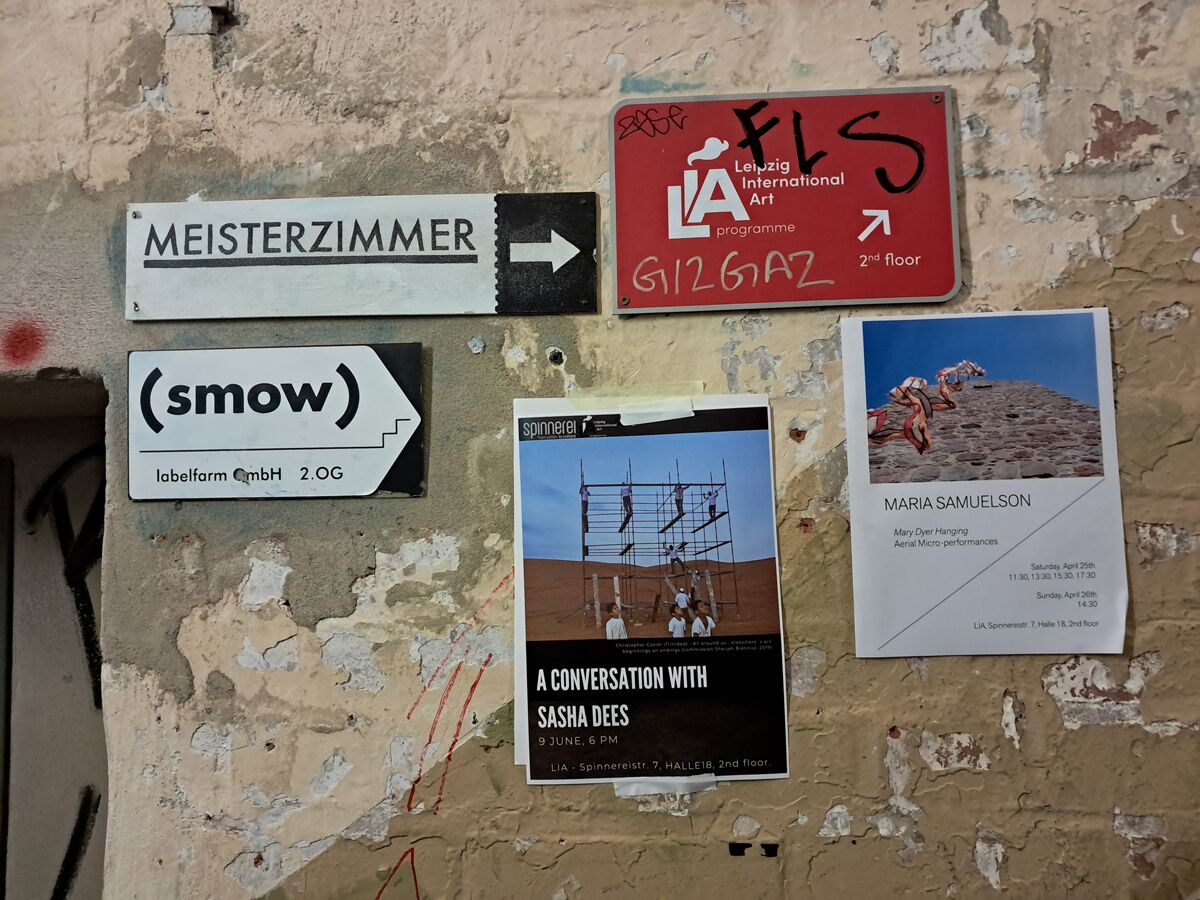
LIAP is a nonprofit residency program for international artists. There are five large—and, not unimportantly for some artists, high-ceilinged—studios where artists work and live (kitchen and bathroom are shared). There is also a common area where a group exhibition is presented during the residency. In addition, there is an extensive program in which the group collectively visits museums, galleries, and local artists, and studio visits are organized to foster connections between the residents and art professionals.
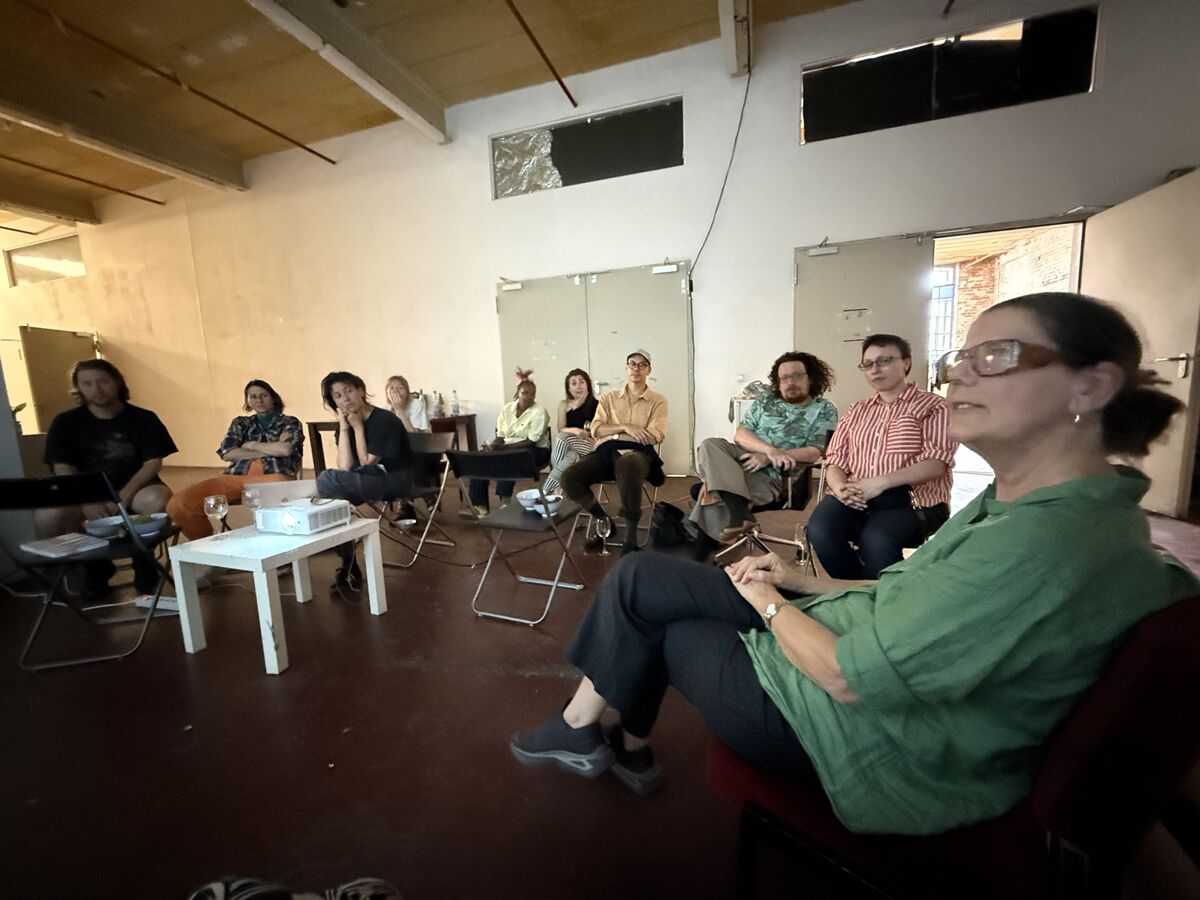
In 2020, during the COVID-19 pandemic, I visited LIAP at the Spinnerei in Leipzig for the first time and wrote extensively about it. This month, I was invited to spend a few days there as a visiting curator to conduct studio visits with the current residents and to have a conversation with LIAP founder Anna-Louise Rolland about the publication *Entangled Species* and art in the Caribbean. Leipzig is best known for the painters of the Leipziger Schule, and on this trip I see the influence of that diverse group of artists everywhere—among the residents, as well as in galleries and museums.
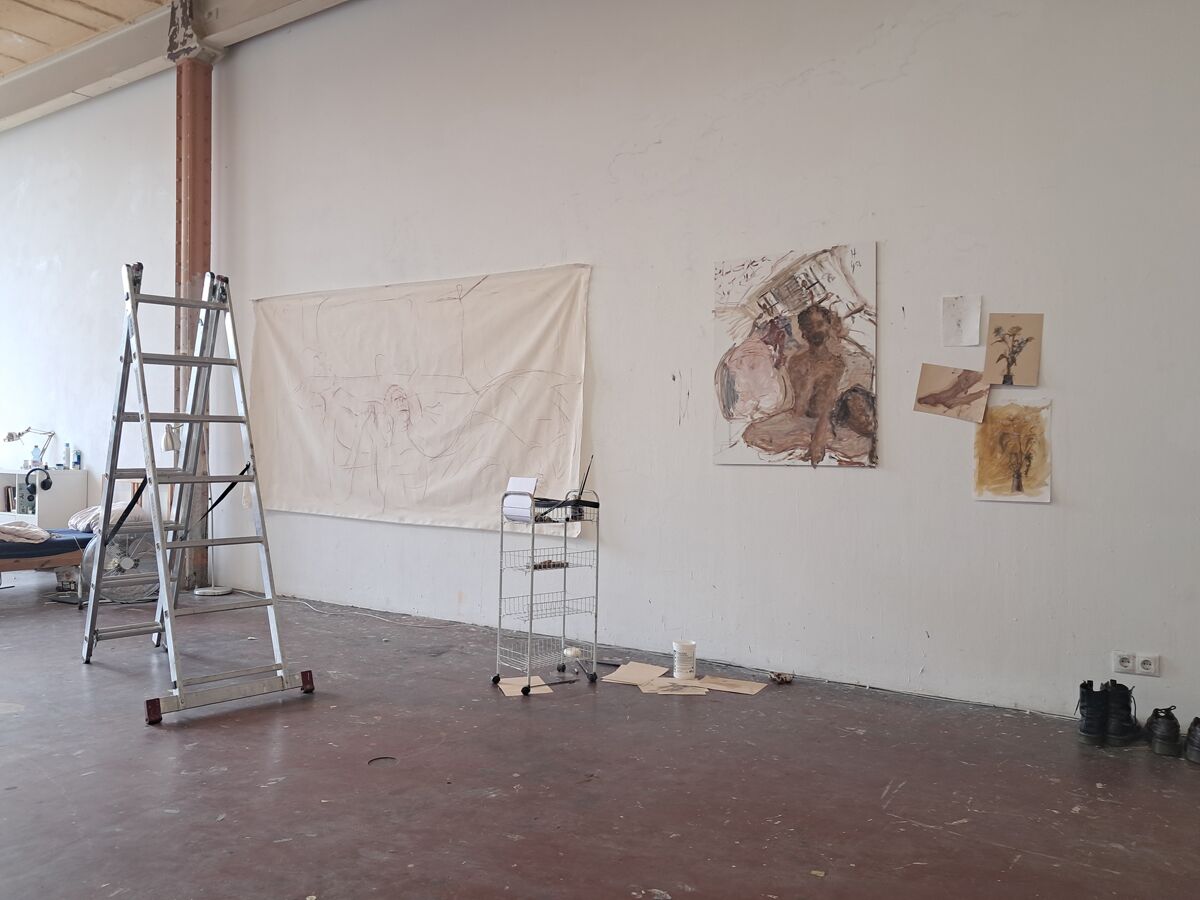
LIAP has a partnership with the NY Academy of Art (a private MFA program in Tribeca). Four students are given the opportunity to travel to Leipzig to complete their first residency there after earning their master’s degrees. In this case, two students are sharing a studio. The four arrived a week before I did and have barely gotten over their jet lag. So it happens that I see intriguing works on a phone screen but, in the studio, find myself staring at (almost) empty canvases on the wall in the first studio—which offer very little to reflect on, hahaha.
Areeba Afreen Qureshi came to New York from Lahore, Pakistan, for the MFA program. She paints (figuratively) and, to a lesser extent, creates sculptures. Like many female students, her work deals with the body; in her case, she explores one’s relationships with others, specifically mentioning “safety” and “social contact” in the context of Pakistan.
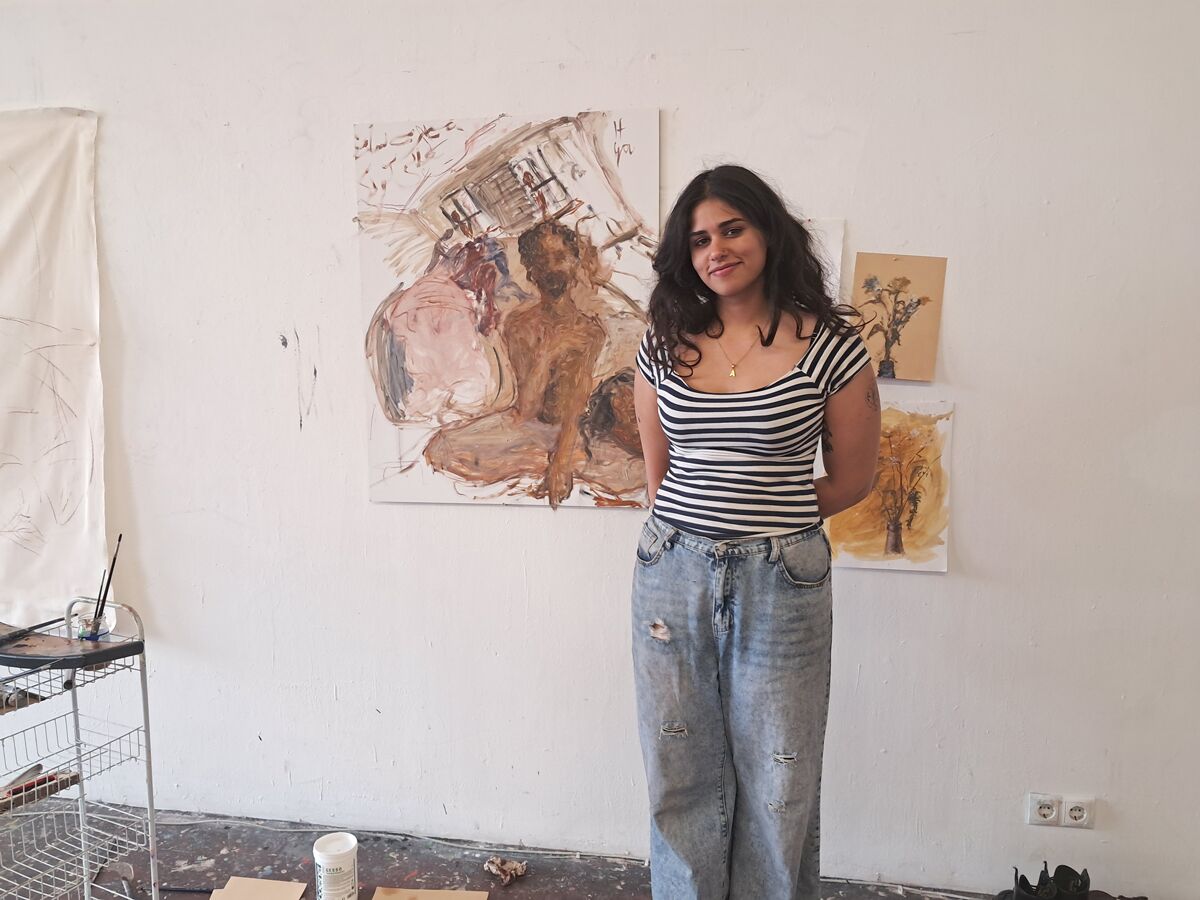
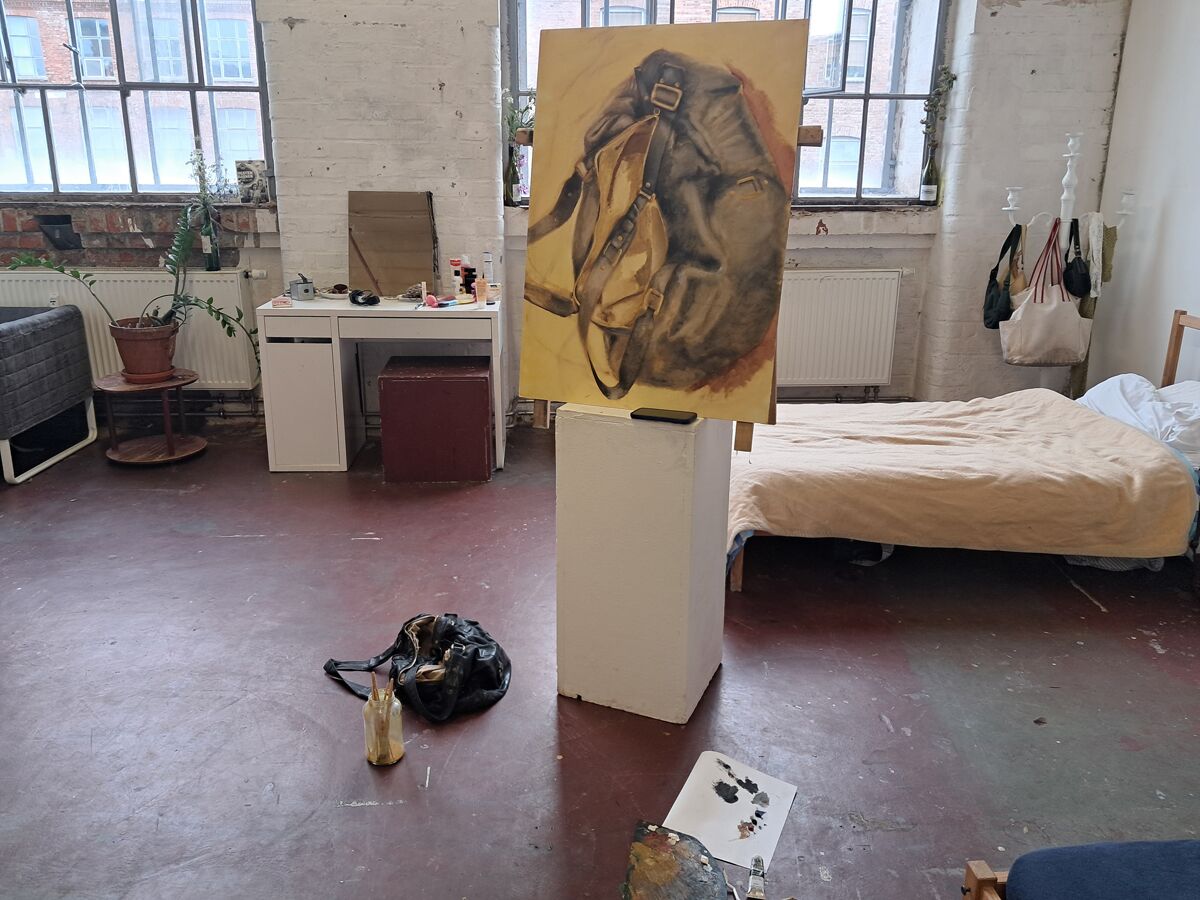
American artist Carly Kate Andrew focuses on figurative painting and printmaking. She is fascinated by intimacy. On her phone, she shows me how she got started, and I scroll through what I’ll describe as her “Nan Goldin period” to where she is now—where she only paints objects in which intimacy is “visible” because they are everyday objects; their “wear and tear” makes the “strong bond” between the object and the user’s personal (intimate) connection palpable.
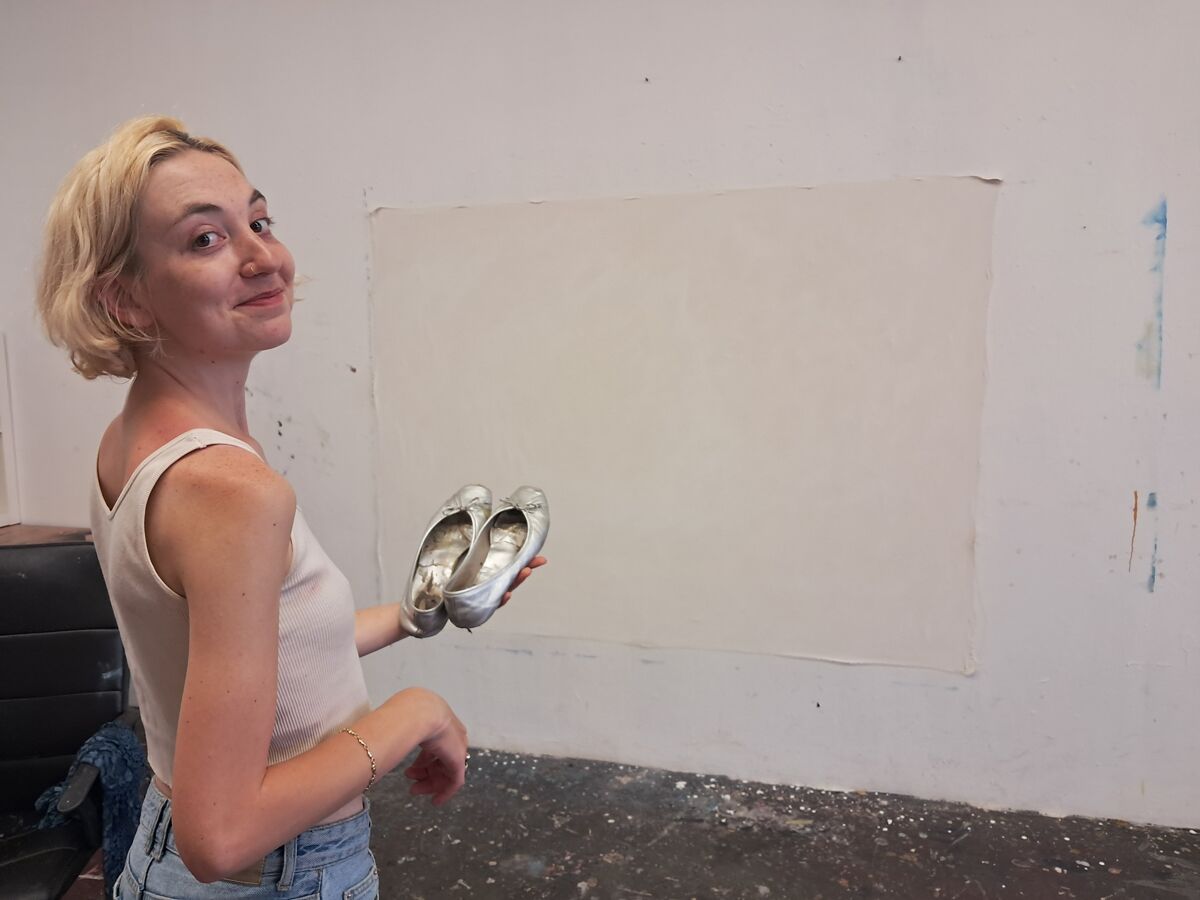
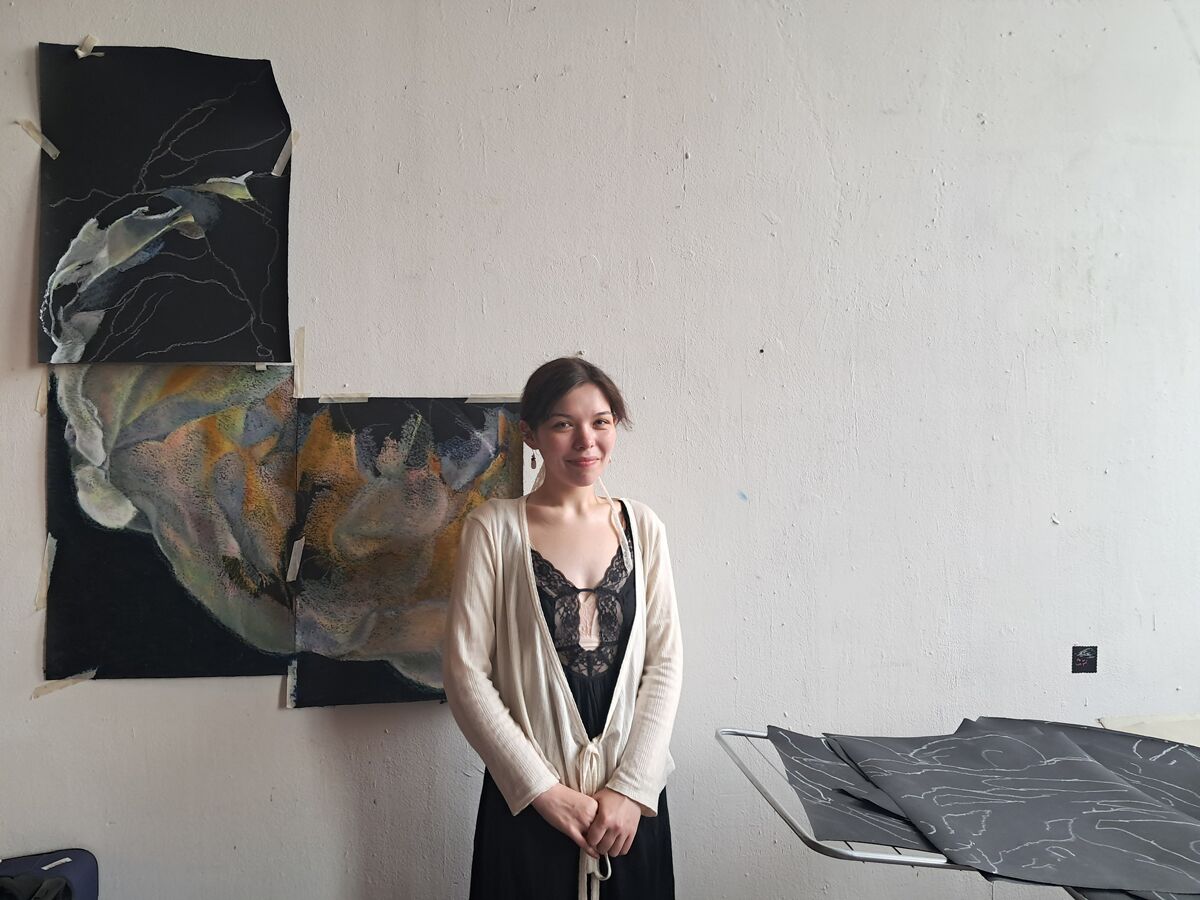
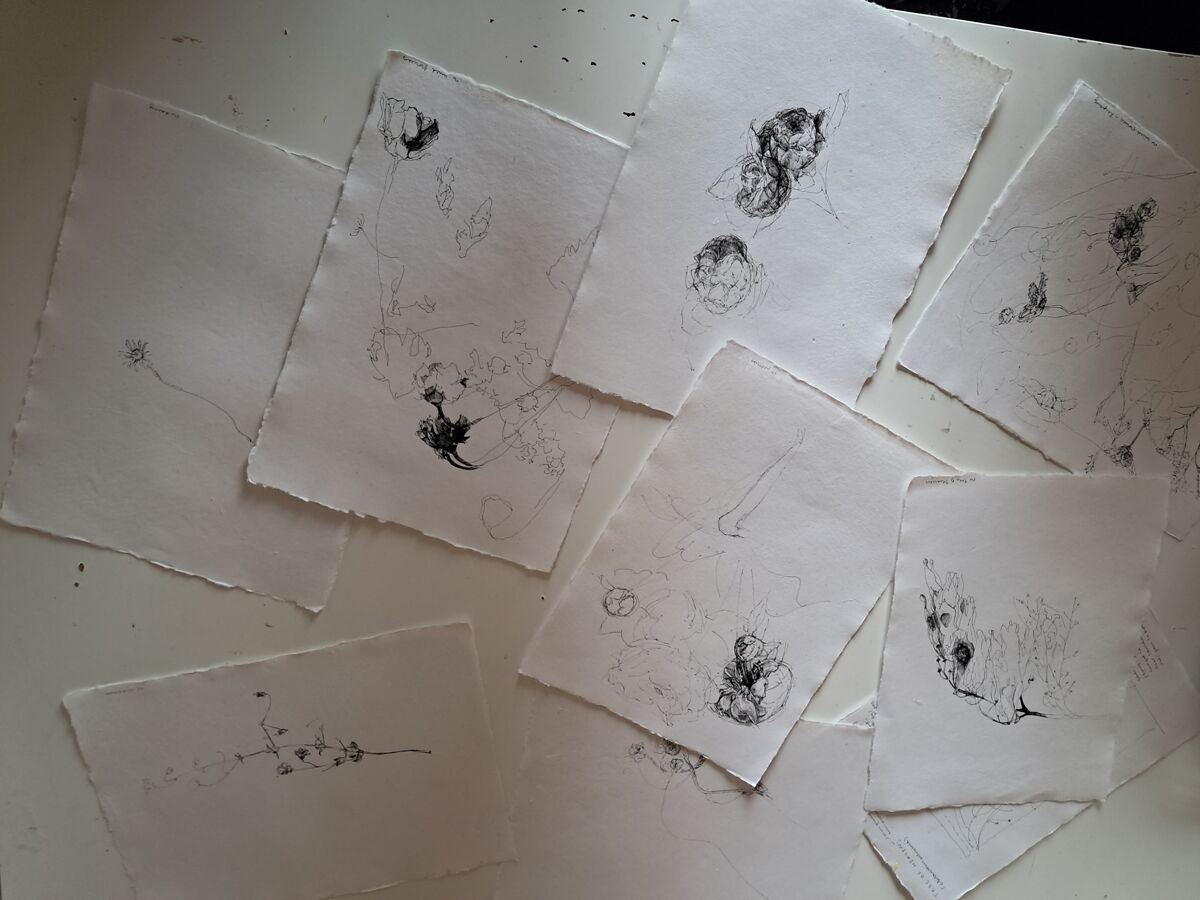
In the second studio, the recent graduates have been working with greater vigor. Helen Wordsworth, from Scotland, previously studied art history and literature but took the plunge into the creative world and chose to pursue an MFA. Flowers are her subject, rendered in pastel colors on a black background, captured in states of bloom and decay. Here, too, she works figuratively; during her residency, she is exploring, among other things, a connection between her love of literature and “the flower.”
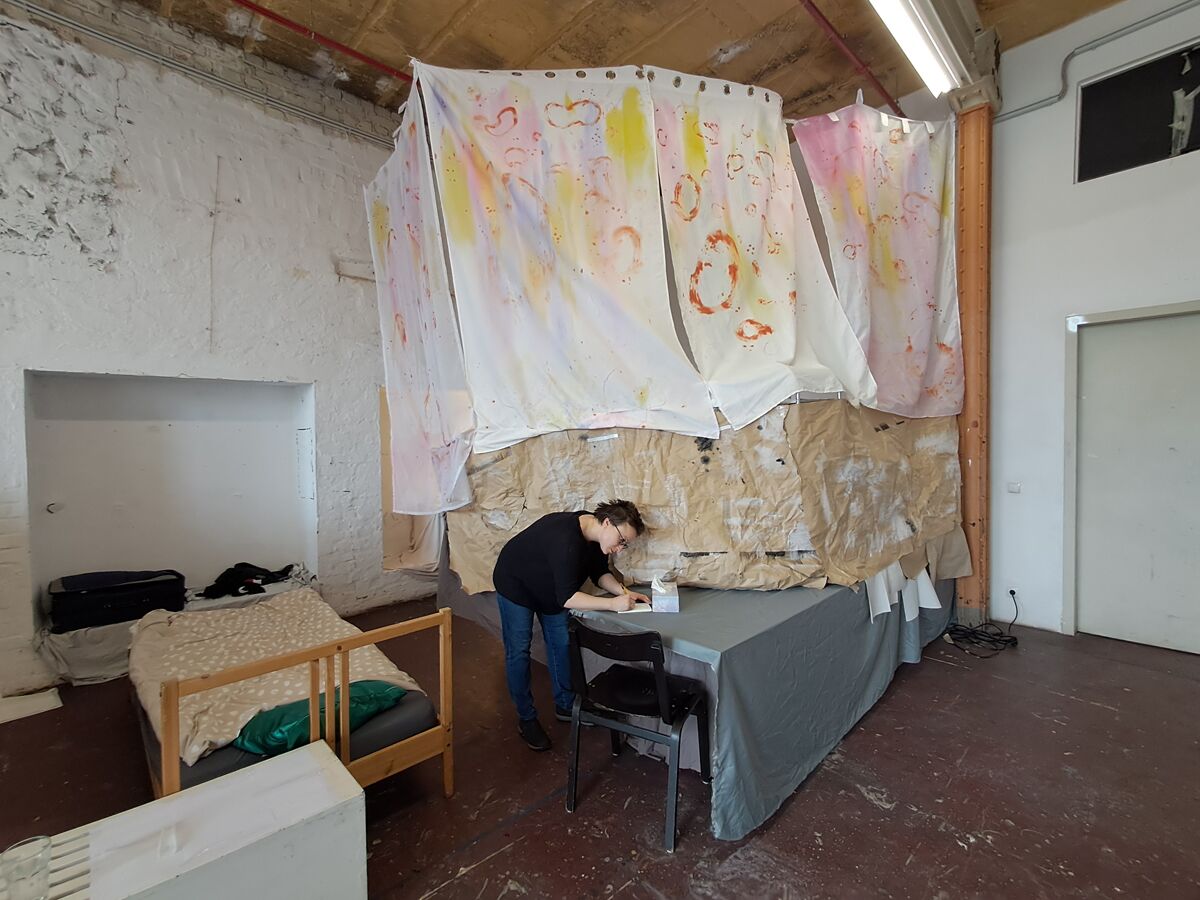
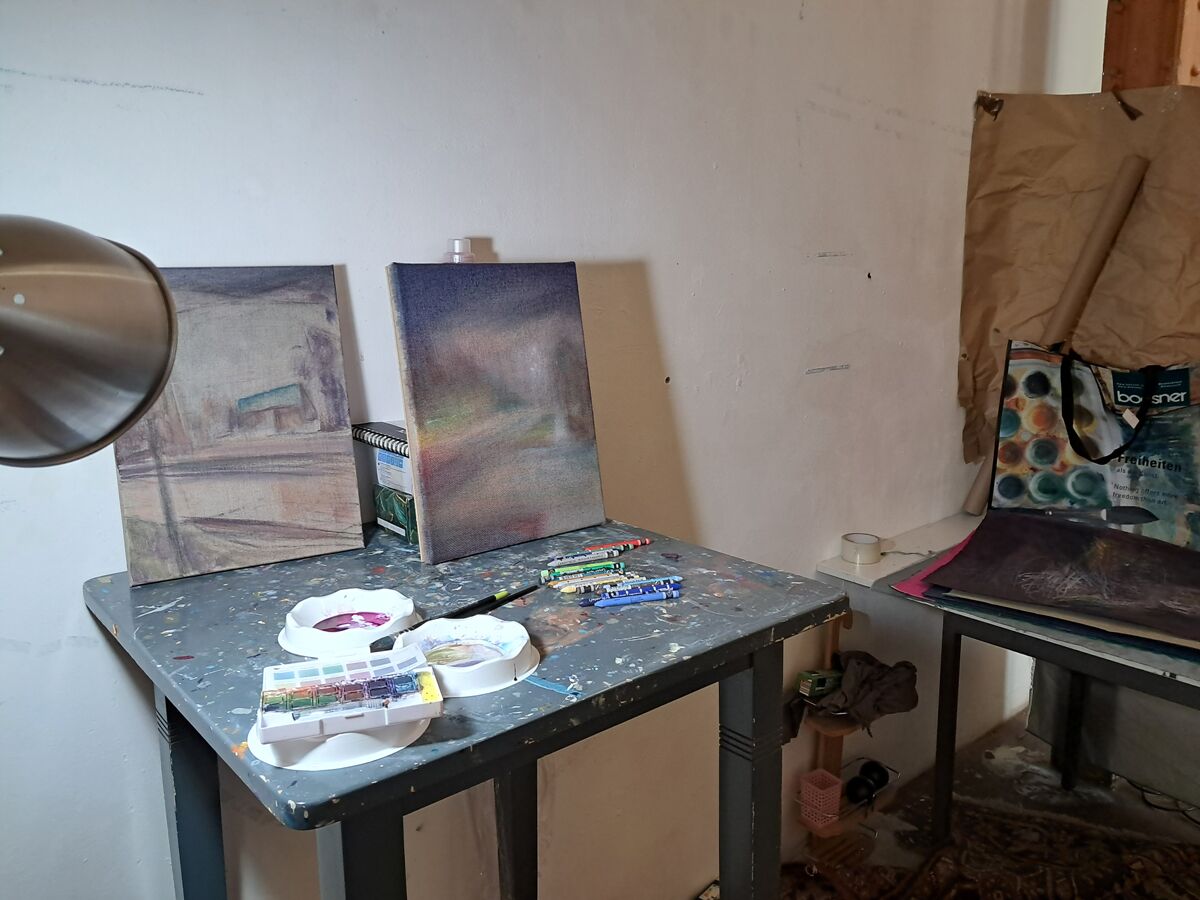
Michelle Palatnik, born and raised in New York, is her roommate (https://www.michellepalatnik.com). Painting is her medium, but when I walk into the studio, she has built an entire installation—an intuitive response to a new (and still uncomfortable) environment—which she later suggests might be a medium she can explore. The installation offers her safety and protection to paint; you feel as though you’re being admitted into something special—an abstract, universal glimpse into the psyche of… The small canvases depicting exteriors reveal uncertainty and emotional tension, but also that sense of safety, and the unique “light” she creates in her paintings—a helping hand, a glimmer of hope.
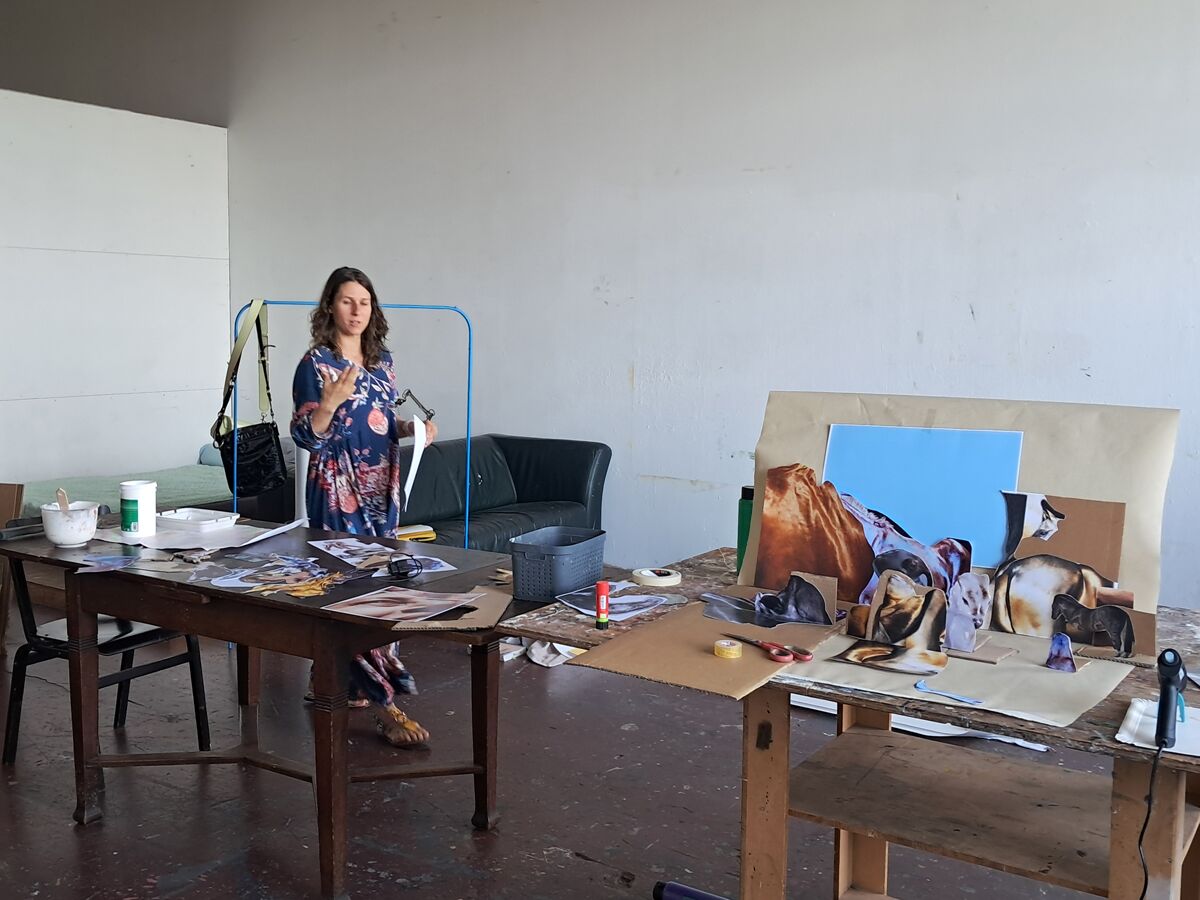
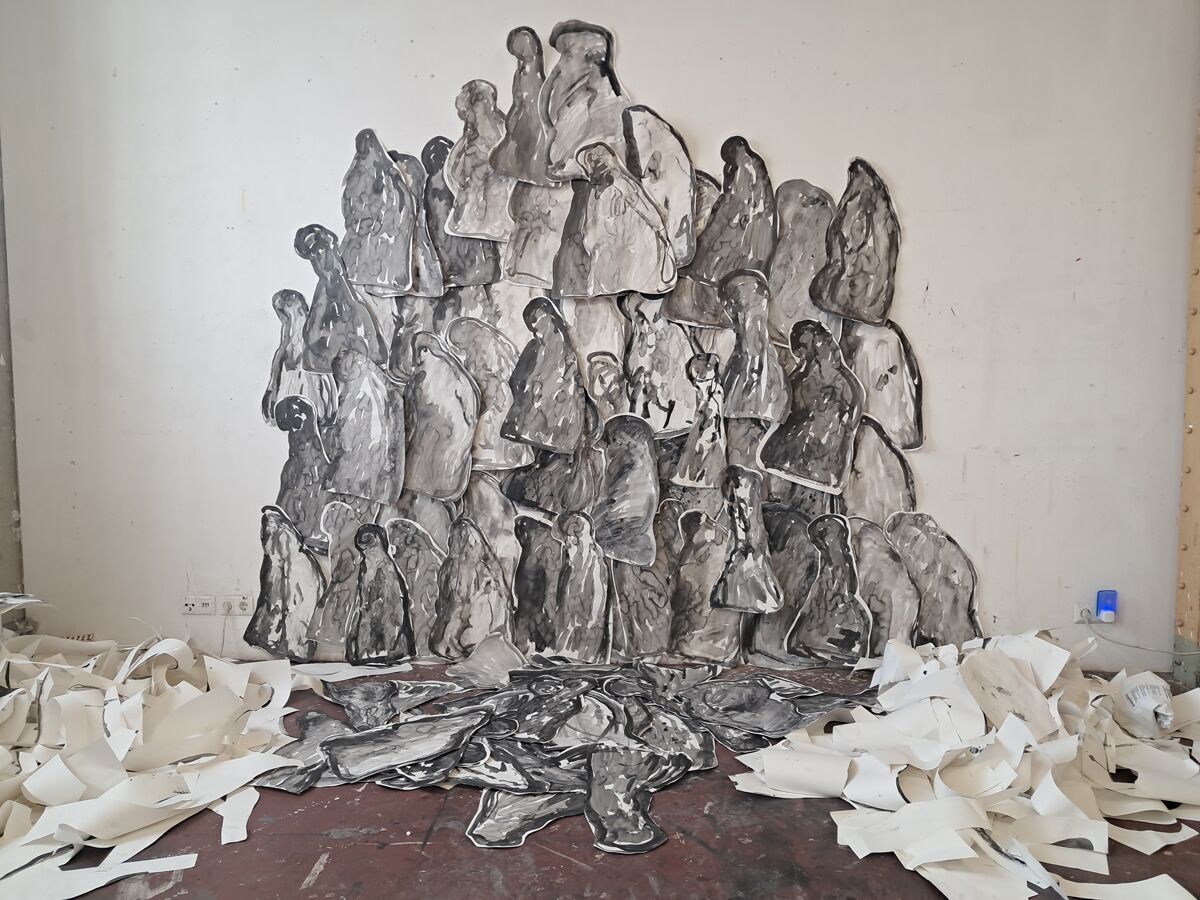
Over the past three years since completing her MFA, Michaela Kessler has been making a name for herself locally in Austria. LIAP is her first step beyond her local context. In her work, too, I see an exploration of the body, intimacy, and space. In recent years, she has worked primarily in the medium of drawing. Her drawings are large-scale and involve a time-consuming process; a single piece easily takes her at least three months to complete. During the residency, she primarily wants to explore new work and experiment with new media—she’s currently creating spaces and researching the structure of animal skin and hair (horses, while I’m there). And she wants to start painting… there’s a large empty canvas hanging on the wall here, too!
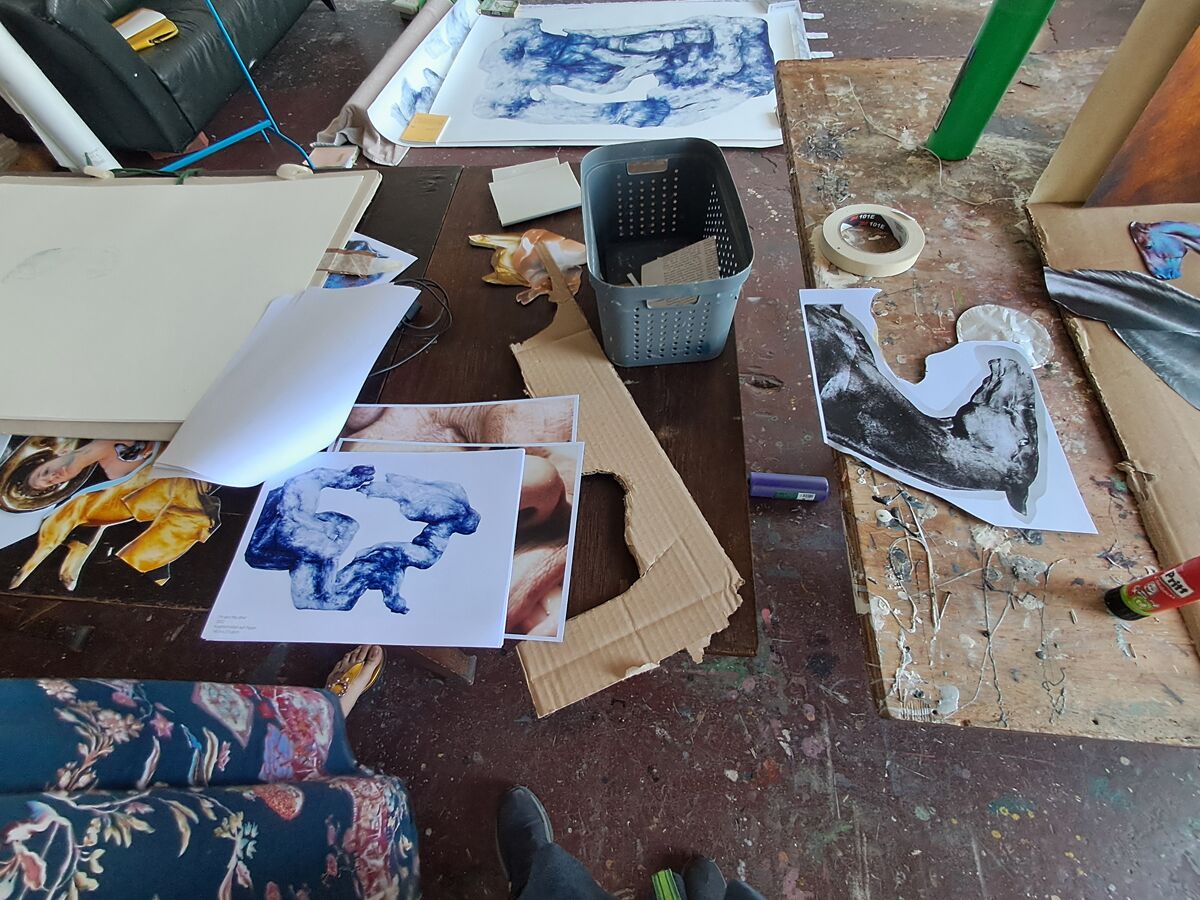
And in the “Dutch Artists Are Everywhere” category, at LIAP that’s mixed-media artist Monika Dahlberg. #IamwhoIam: In Leipzig, Dahlberg continues her exploration of the physical challenges her body faces and how to translate those into her work. Dahlberg suffered severe burns as a baby and, as a result, has two prosthetic legs. In her current research and work, she uses her amputation stumps as a starting point. Dahlberg approaches everything with great intention; her studio is, therefore, an explosion of “work in progress” across various media, including painting, drawing, installation, ceramics, and sculpture.
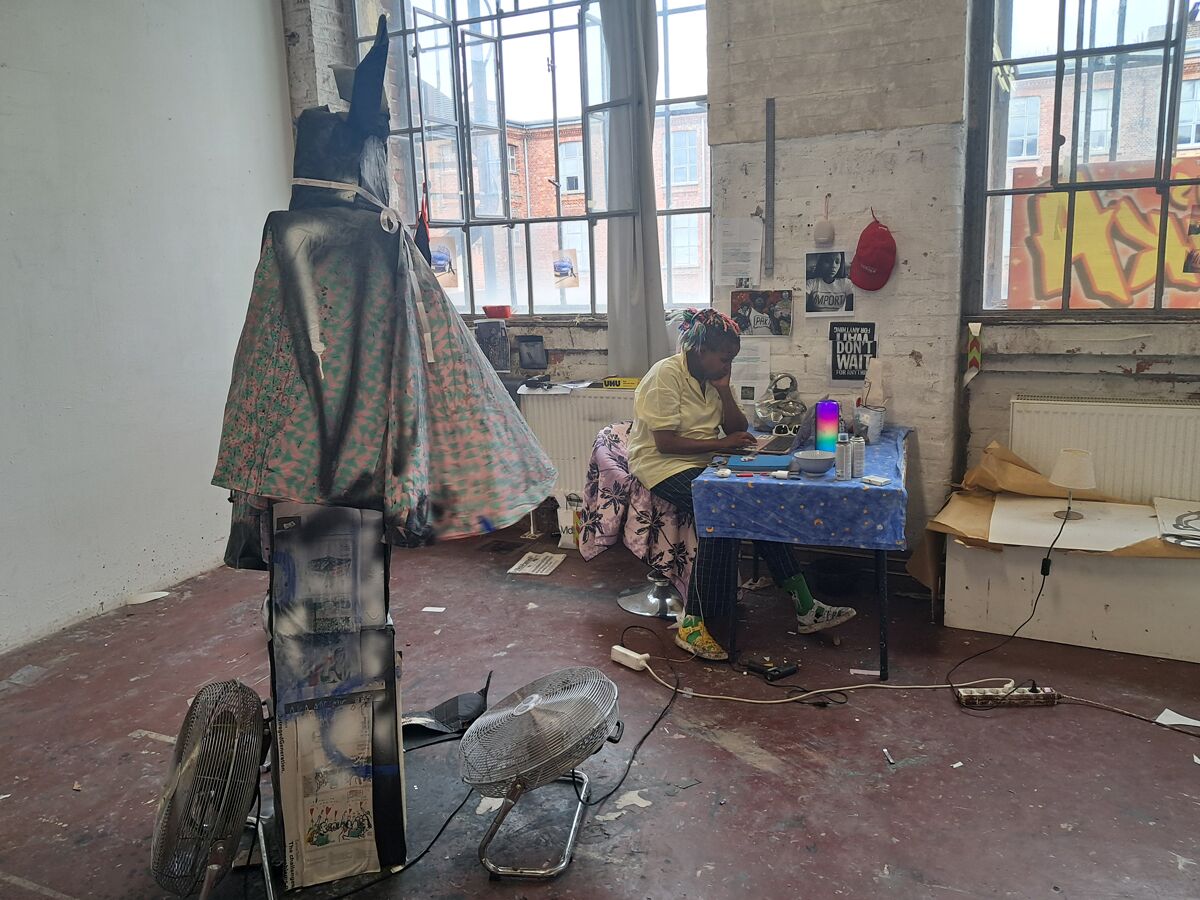
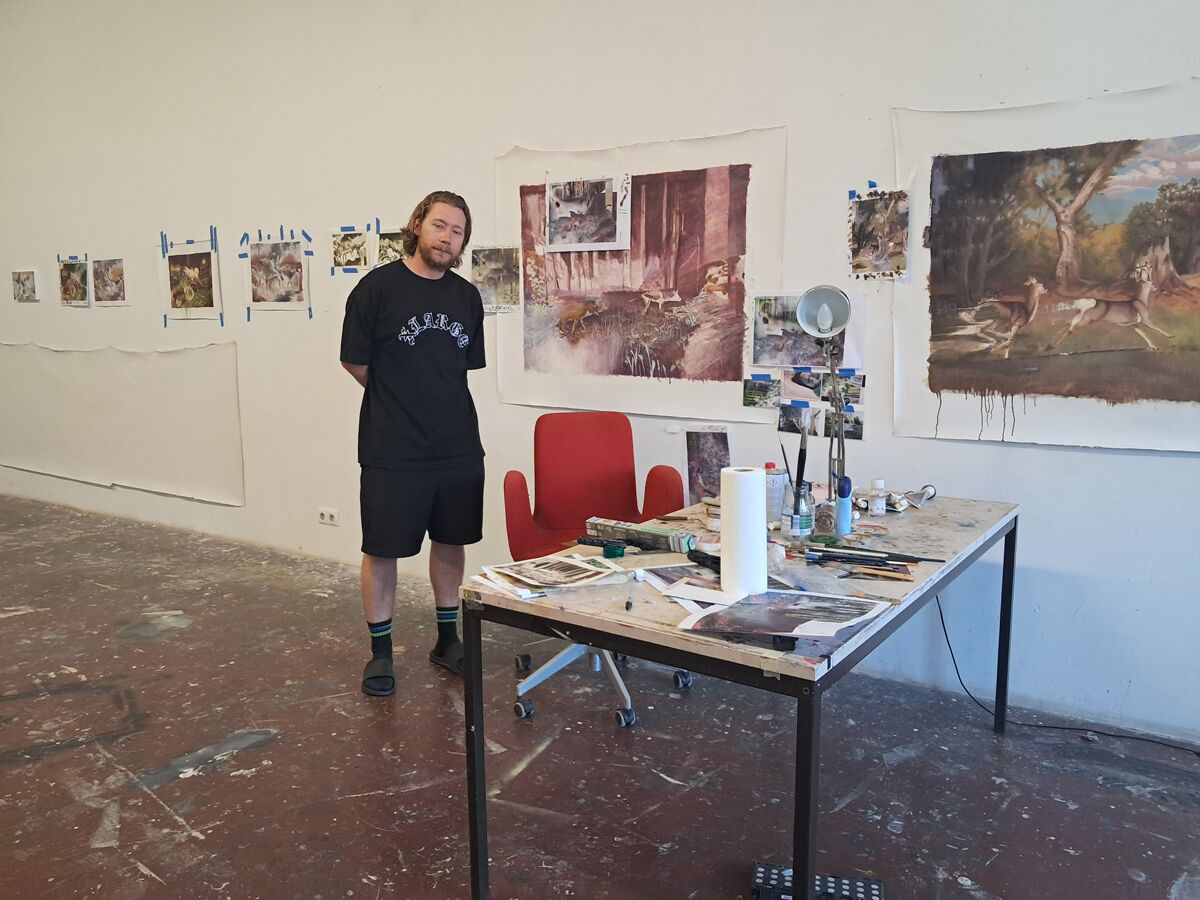
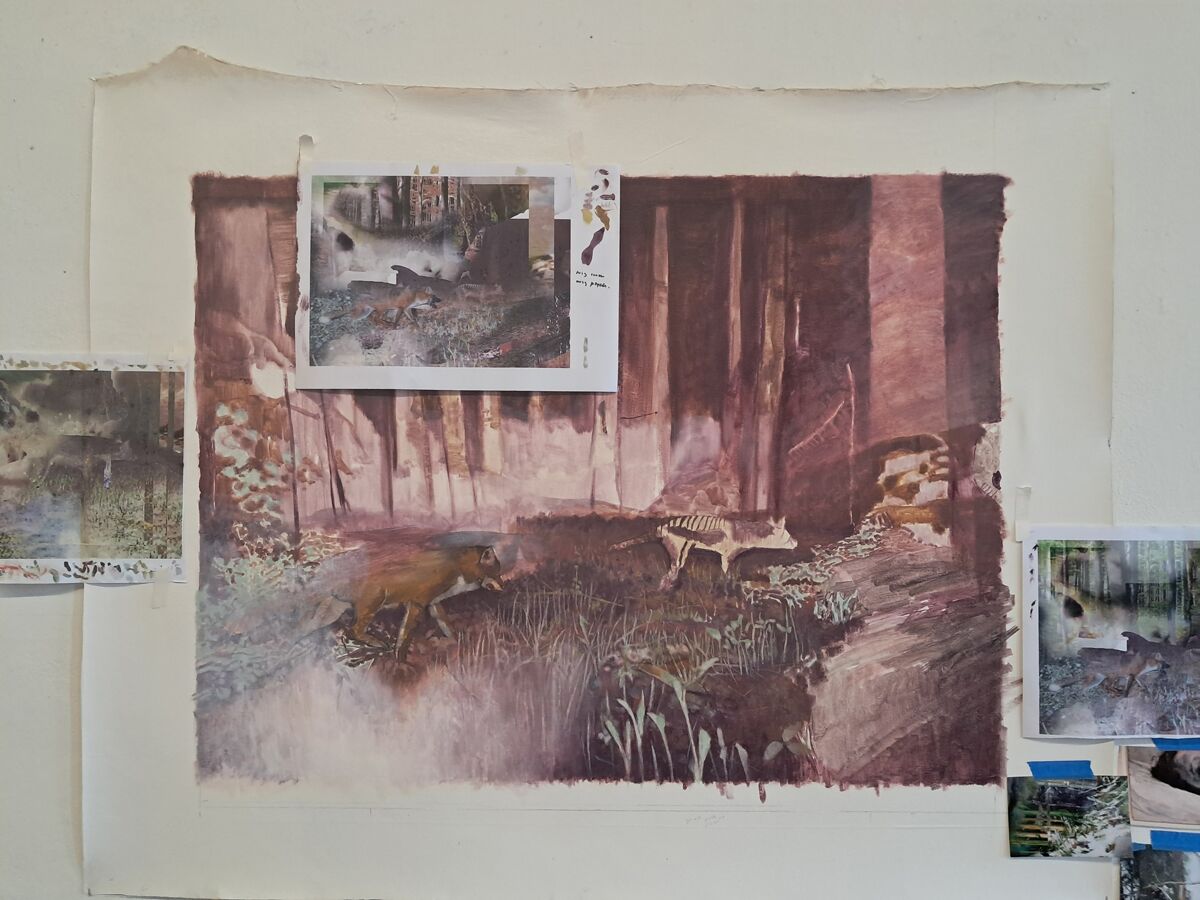
Australian artist Jarrad Martyn explores humanity’s relationship with the natural environment. Drawing on archival materials, he creates drawings and collages, which he then meticulously and carefully abstracts into his final paintings. In Leipzig, he is conducting research in archives on native Australian flora and fauna that have ended up in the “tropical collections” of museums and zoos in Germany over the past few centuries.
On June 27, the group exhibition will open in the LIAP common area, featuring the work of the artists listed above, curated by Marina Diaz.
LEIPZIG INTERNATIONAL ARTIST PROGRAM (LIAP)
Spinnereistraße 7, Building 18, 2nd floor, right
04179 Leipzig
Germany
W: www.liap.eu


